


Web Application Development
Modern, performant web applications built with TypeScript, PHP and proven frameworks. From SPAs to full-stack platforms, optimised for speed and SEO.
Fast, accessible web applications that users love
The web is the most accessible platform on earth. A well-built web application reaches every device, every operating system, every user without app store gatekeepers. We build web apps that load fast, rank well and convert visitors into customers.
We deliver production-grade web applications with client-side routing, internationalisation, Service Worker caching, structured data and Lighthouse CI checks enforcing high standards across performance, accessibility, best practices and SEO.
Whether you need a lightweight marketing site, a complex internal tool or a full SaaS platform, we architect for performance from day one. Modern CSS, lazy-loaded assets, edge caching and progressive enhancement are foundations, not afterthoughts.

Production-grade web applications with Lighthouse scores consistently above 90 across performance, accessibility and SEO. Every project receives the same attention to quality and detail.
Proven web delivery track record
When to choose a web application
You want maximum reach without app store dependencies
SEO and organic reach are important to your business
Your users need instant access from any device
You're building an internal tool, dashboard or SaaS product
Our delivery process
-
Planning
Sitemap, wireframes, performance budget
-
Design
Responsive UI, design system, accessibility
-
Build
Component-driven development, testing
-
Optimise & Ship
Core Web Vitals, CDN, monitoring
Tech stack we use
Frequently asked questions
What kind of web apps do you build?
Everything from lightweight marketing sites to complex SaaS platforms, admin dashboards and internal tools. Each project gets a tailored architecture.
Will my web app work offline?
If needed, yes. We implement Service Workers and progressive enhancement so your app remains functional even without connectivity.
How do you ensure performance?
Performance is a first-class concern from day one. We set Lighthouse budgets, optimise Core Web Vitals and monitor real-user metrics post-launch.
Can you handle multilingual sites?
Yes. We have extensive i18n experience across 22+ languages, including RTL support. This very website supports that many languages.
Example Completed Projects


Native-UI
WebsiteThe official home of the Native-UI design system - docs, components, and changelog.





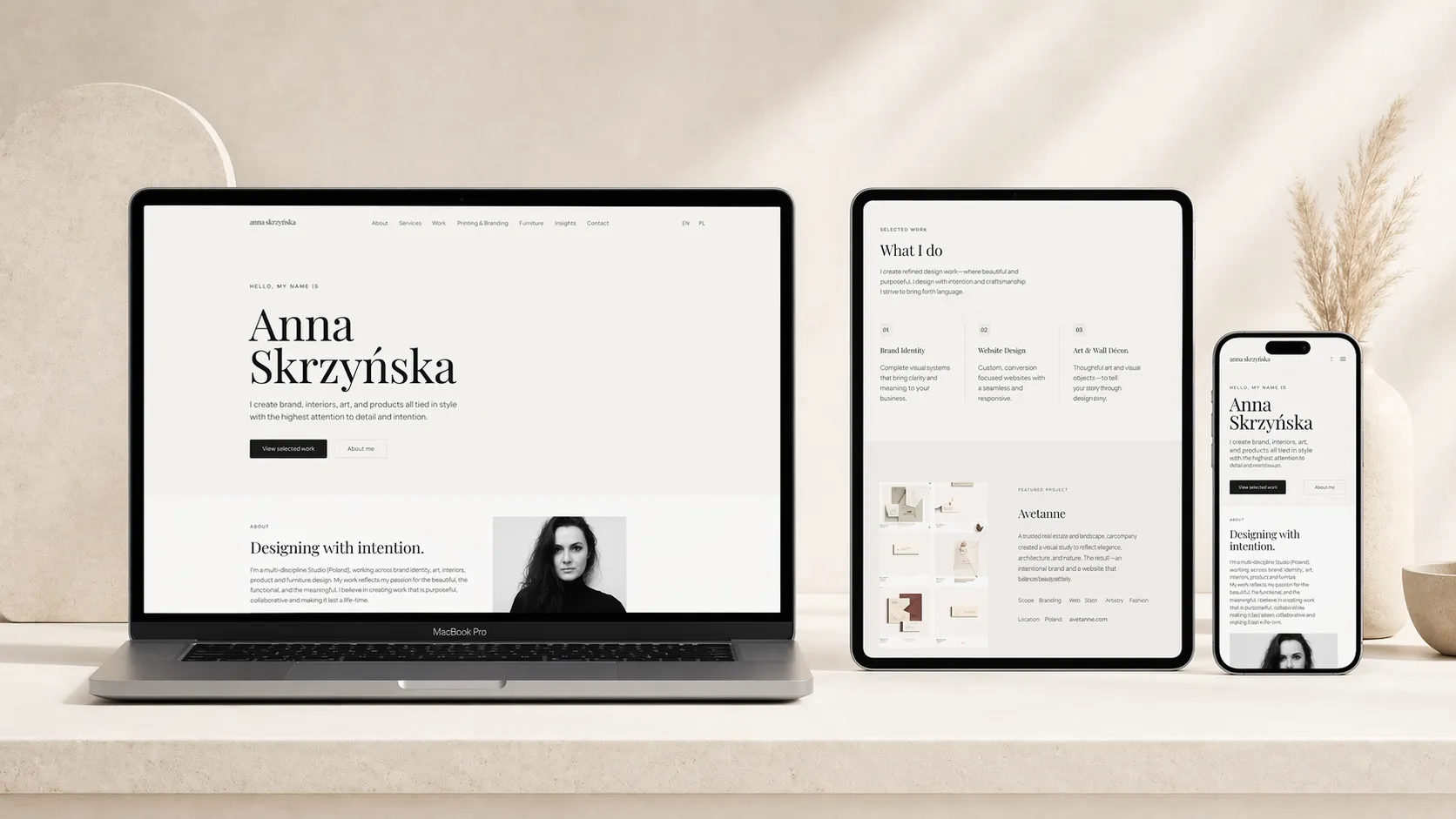

Anna Skrzyńska
WebsitePortfolio of visual designer Anna Skrzyńska - brand identity, web design, photography, painting, and interior concepts.





Chmiel Glassworks
WebsiteModern responsive website for a family-run glass workshop. Service pages, photo gallery and contact form.
Related Articles
SSR vs CSR vs SSG vs ISR: what to choose for SEO and performance
SSR, CSR, SSG and ISR compared
SSR vs CSR vs SSG vs ISR: what to choose for SEO and performance
SSR, CSR, SSG and ISR differ mainly in where and when HTML is generated. For SEO, the key question is whether important content and metadata are available without waiting for client-side JavaScript. For performance, server cost, caching, JavaScript execution, hydration and freshness matter as well. In 2026, the best architecture is usually not one rendering mode for an entire application, but a strategy selected for each route or even each part of a route.
CORS: what it is and why the browser blocks an API
Simple CORS request and Preflighted CORS request compared
CORS: what it is and why the browser blocks an API
CORS is not a mechanism that simply blocks connections to an API. It is a browser protocol built on the same-origin policy that decides whether JavaScript from one origin may read a response from another origin. In some cases the HTTP request is sent and the browser only blocks script access to the response. In other cases the browser sends an OPTIONS preflight first and uses its result to decide whether the actual request may be sent at all.
Core Web Vitals in 2026: LCP, INP and CLS in practice
LCP, INP and CLS compared
Core Web Vitals in 2026: LCP, INP and CLS in practice
Core Web Vitals in 2026 still consist of three metrics: LCP for loading the main content, INP for interaction responsiveness and CLS for layout stability. The scores alone do not tell you what to fix. Effective optimization requires separating real-user field data from lab tests, finding the actual LCP element, slow interaction or layout shift source, and then monitoring the result after deployment.
Ready to launch your web application?
Let's discuss your requirements and create something exceptional.