

Unit Converter FREE
Convert length, weight, temperature, data, speed, pressure and sixteen more categories instantly. Exact defining constants, SI against IEC kept apart, and every figure calculated in your browser.
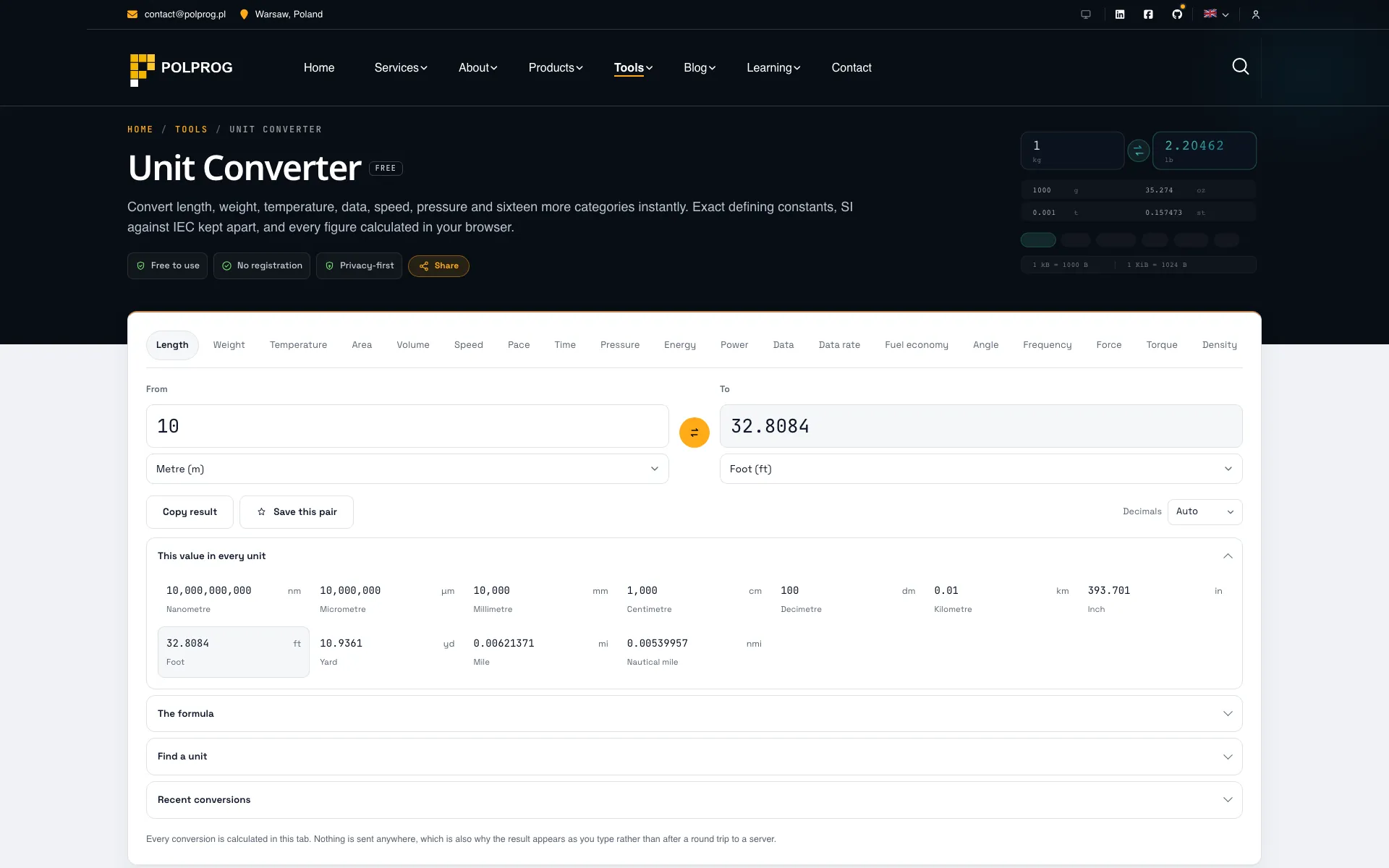

This value in every unit
The formula
Find a unit
Recent conversions
Every conversion is calculated in this tab. Nothing is sent anywhere, which is also why the result appears as you type rather than after a round trip to a server.
What these numbers are, and what they are not
Definitions, not a table somebody typed
Every factor here is the constant the unit is defined by: an inch is exactly 2.54 cm, a pound exactly 0.45359237 kg, a US gallon 231 cubic inches. Conversions go through one base unit per category, so no answer is a chain of roundings and only the display is rounded. What the tool will not do is guess: cups of flour to grams needs a density, so the cooking category converts volumes to volumes and says so. Everything is calculated in your browser.
FAQ
Are my conversions sent anywhere?
No. The arithmetic runs in this tab, which is why the result appears while you are still typing instead of after a round trip. Nothing is uploaded and nothing is stored on a server; the last unit pair you used and the short history are kept in this browser and can be cleared from the panel below.
What is the difference between KB and KiB?
A kilobyte is 1000 bytes and a kibibyte is 1024. The SI prefixes (kB, MB, GB) count in powers of a thousand; the IEC ones (KiB, MiB, GiB) count in powers of 1024. Both are in the list and they are never mixed, which is why a 500 GB disk shows up as 465 GiB in an operating system that counts the other way. Neither is wrong, but treating one as the other is.
Why is a US gallon not the same as a UK one?
They were never the same. A US gallon is 231 cubic inches, which is 3.785 litres; an imperial gallon is 4.54609 litres exactly. That is a 20% difference, and it runs through every unit built on them - pints, quarts and fluid ounces are all different on the two sides of the Atlantic. Every unit here says which system it belongs to.
How is temperature different from other conversions?
Most units convert by multiplying: a kilometre is always 1000 metres. Temperature scales do not share a zero, so they also need an offset: °F = °C × 9/5 + 32. That is why 20 °C is not twice 10 °C in Fahrenheit, and why this converter treats temperature as its own kind of conversion rather than as a factor. Fuel economy and pace are a third kind again: they invert, so more litres per 100 km is fewer miles per gallon.
How exact are the numbers?
Where a unit is defined exactly in terms of an SI unit, the exact definition is used: an inch is 0.0254 m, a pound is 0.45359237 kg, a US gallon is 231 cubic inches, an acre is 4046.8564224 m². Everything converts through one base unit per category, so no conversion is a chain of roundings. The result is displayed at six significant figures by default, and you can ask for more.
Can I convert cups of flour to grams?
Not here, and not honestly anywhere without naming the ingredient. A cup is a volume and a gram is a mass; converting between them needs a density, and flour, sugar and butter all have different ones. The cooking category converts volumes to volumes - teaspoons, tablespoons, cups, millilitres - and keeps the US, imperial and metric spoons apart, because those are three different sizes.
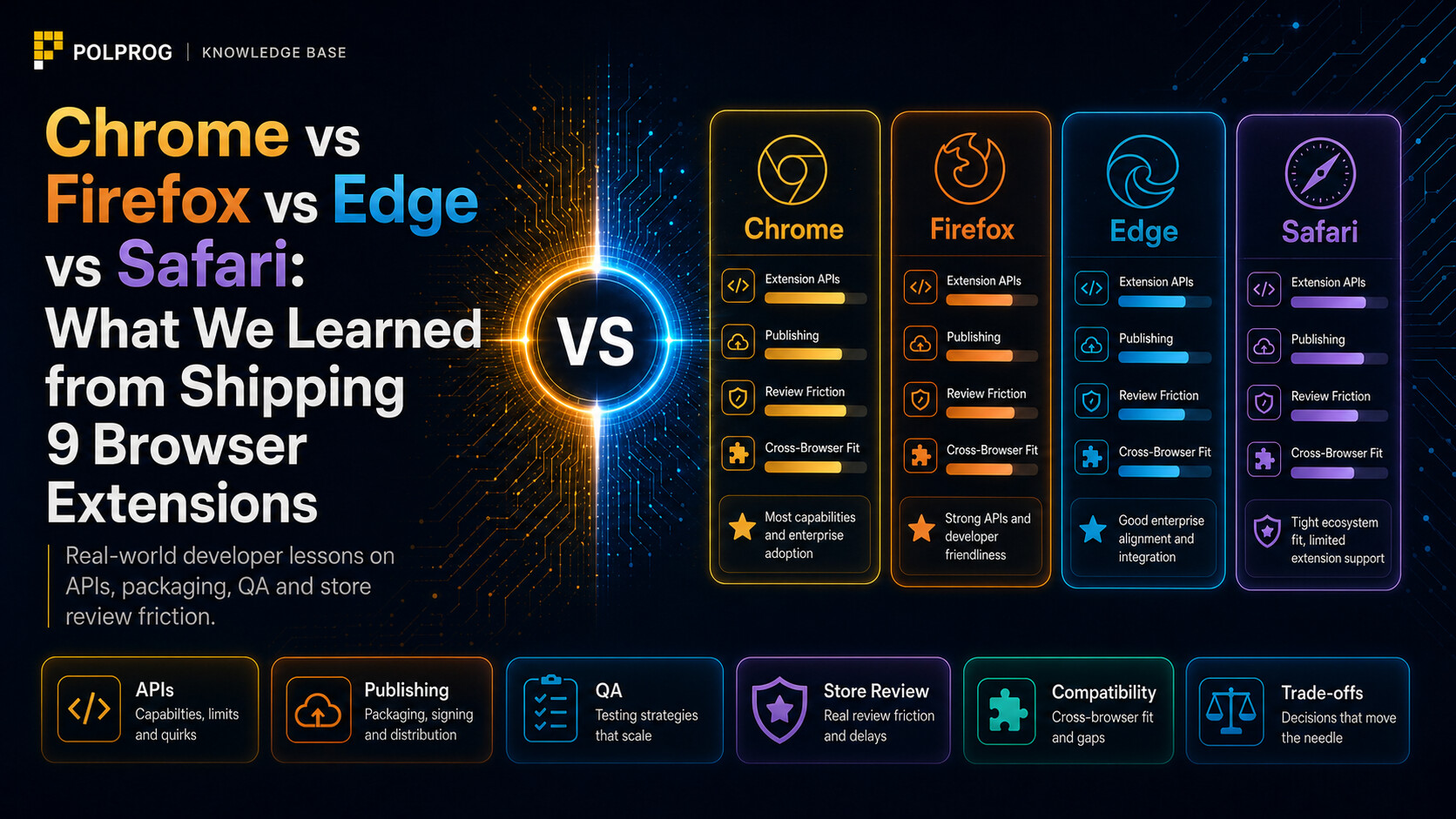
Chrome vs Firefox vs Edge vs Safari: what we learned from shipping 9 browser extensions
Nine extensions, four browsers and far more than one `manifest.json` file. We show where shared code really ends, why Safari needs a separate process and which bugs are exposed only by Firefox and extension stores.

Claude Code vs OpenAI Codex vs Gemini CLI: the best AI coding agent in 2026
Claude Code, OpenAI Codex, and Gemini CLI can read repositories, edit files, and run tests, but they were designed for different styles of work. We compare quality, benchmarks, security, parallel execution, extensions, pricing, and privacy.

How Custom Software Helps Teams Automate Repetitive Work
Not every task should be automated, and not every automation needs a full product. The useful skill is deciding which tasks are worth it, and then building the smallest tool that actually removes them.
Build a better web, faster.
We build custom software and solutions tailored to your needs.