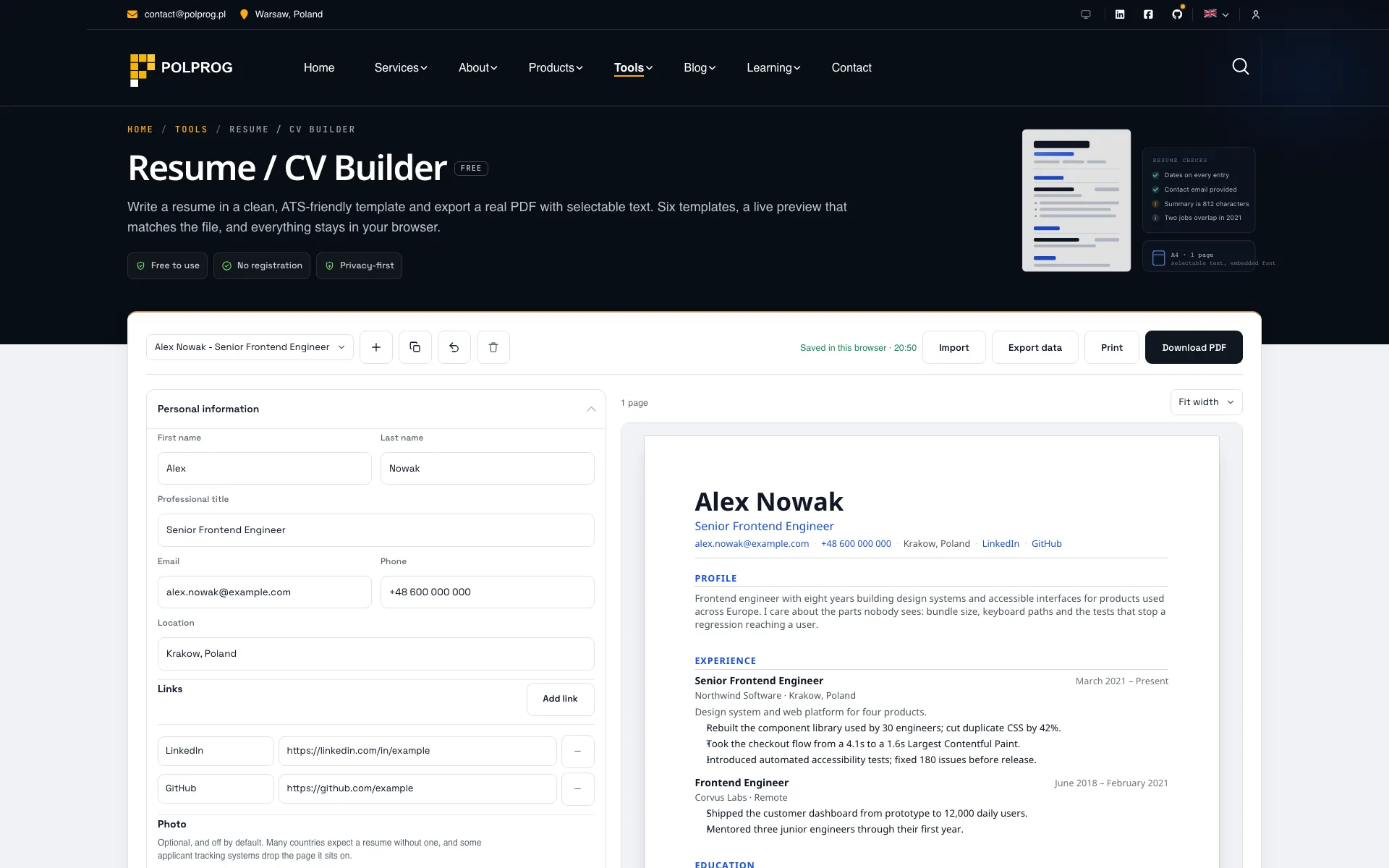
An editor on the left, the document on the right, and one layout engine behind both. That is the whole idea: the page break you see on screen is the page break in the file, because the same code decided it and the same font file measured it.
The PDF is written in this tab. It is PDF 1.7 with a subset TrueType font embedded and a /ToUnicode map, so the text is selectable, searchable and machine readable rather than a picture of a page. Polish, Czech, Greek and Cyrillic all survive the export. For a script the embedded fonts do not cover, the tool names the characters and refuses, and offers printing - which uses the fonts on your own machine - instead of shipping a file with holes in somebody name.
What it will not claim
There is no ATS score here, and there will not be one. Applicant tracking systems are not one system, they are dozens, they are not published, and a number invented by a website is a number about nothing. What the tool does instead is say which templates have a single reading order and where a photograph sits, and let you decide.
The checks panel is the same idea. Every finding is a fact about your document - this entry has no start date, these two jobs overlap, this bullet is 340 characters - with a button that takes you to the field. No percentages, no grades.
Where the document lives
In this browser, in IndexedDB, on this device. There is no API call in the tool and no server copy: the only things the page fetches are the two font files it lays the document out with. Export the JSON whenever you want a copy you control.